
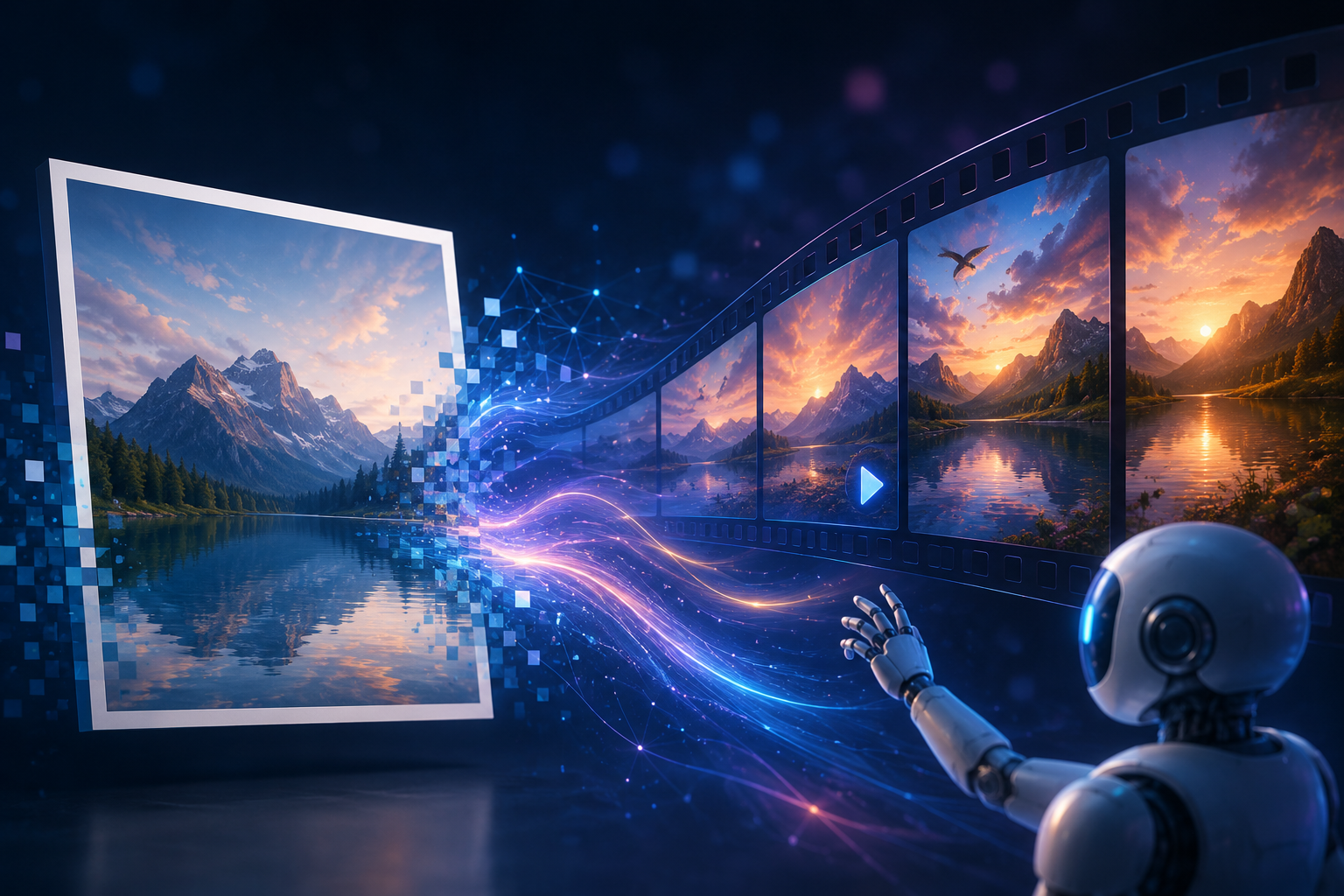
Visual content has changed dramatically over the past few years.
For decades, businesses, marketers, and designers relied heavily on static images to communicate ideas, showcase products, and attract attention online. Today, however, video has become the dominant format across nearly every major digital platform.
The rise of artificial intelligence is accelerating this shift even further. Instead of spending days creating animations or editing footage, creators can now turn a single image into a compelling video within minutes.
Many designers and marketers are already using an AI free video generator to transform product photos, social media graphics, concept artwork, and presentations into dynamic visual stories without advanced editing skills.
This change is not simply a new creative trend. It represents a fundamental transformation in how digital content is produced and consumed.
Table of Contents
ToggleWhy Static Images Are Losing Attention
Static images remain valuable for branding and design, but audience behavior has evolved.
Platforms such as TikTok, Instagram Reels, YouTube Shorts, and LinkedIn increasingly prioritize video content because it generates stronger engagement and longer viewing sessions.
Research shows that short-form video has become one of the most preferred online content formats. In a survey of more than 1,000 U.S. consumers, 61% reported that short-form video is more engaging than articles, podcasts, or long-form video content.
The reason is simple.
Video can communicate information, emotion, movement, and context far more effectively than a single image. A product image can show what an item looks like, but a video can demonstrate how it works, how it feels, and why it matters.
As user attention becomes increasingly competitive, businesses are shifting toward video-first communication strategies.
What Is AI Video Creation?
AI video creation refers to the use of artificial intelligence to generate videos from text prompts, images, scripts, presentations, or other digital assets.
Modern AI systems can automate many tasks that traditionally required multiple professionals, including:
- Scene generation
- Motion design
- Voiceovers
- Subtitle creation
- Video editing
- Localization
Instead of manually animating every element, users can provide a prompt or upload an image and allow AI to generate a finished video automatically.
This dramatically lowers the barrier to video production for creators, startups, educators, and small businesses.
The Growth of the AI Video Industry
The rapid adoption of AI video tools is reflected in industry growth.
According to Grand View Research, the global AI video generator market was valued at approximately $788.5 million in 2025 and is projected to reach $3.44 billion by 2033, growing at a compound annual growth rate of more than 20%.
The broader AI video market is growing even faster. Analysts estimate the industry could exceed $42 billion by 2033 as organizations continue investing in automated video production technologies.
Several factors are driving this expansion:
- Increased demand for video content
- Growth of social media marketing
- Lower production costs
- Faster content creation workflows
- Rising adoption of AI-powered creative tools
For many organizations, AI video is no longer experimental technology. It has become part of everyday content production.
How AI Turns Images Into Videos
One of the most exciting developments in AI video generation is image-to-video technology.
The process generally involves four stages.
1. Understanding the Image
AI models first analyze the uploaded image.
They identify:
- Objects
- People
- Facial expressions
- Background elements
- Spatial relationships
This allows the system to understand the visual context before generating motion.
2. Creating Motion
After analyzing the image, AI predicts how objects and subjects could move naturally.
Examples include:
- Camera pans
- Zoom effects
- Character movements
- Environmental animation
- Dynamic transitions
The result is a video that feels significantly more engaging than a static image.
3. Adding Audio
Many AI platforms can automatically generate:
- Narration
- Background music
- Sound effects
- Lip synchronization
This creates a more immersive viewing experience without requiring separate audio production.
4. Exporting a Finished Video
The final output can be optimized for various platforms, including:
- TikTok
- Instagram Reels
- YouTube Shorts
- Digital advertising campaigns
What once required a production team can now be completed within minutes.
Real-World Applications
AI video creation is already being used across multiple industries.
Social Media Marketing
Marketing teams use AI video tools to rapidly produce short-form content for social media.
The demand for video continues to increase because platforms reward engaging visual formats. Research consistently shows that users spend substantial time consuming short-form video content across digital channels.
Instead of creating one campaign asset, marketers can generate multiple variations tailored to different audiences.
E-Commerce
Online retailers frequently convert product images into promotional videos.
This allows shoppers to better understand product features while improving engagement on product pages and social media advertisements.
Education and Training
Educational institutions and businesses use AI video to transform presentations, documents, and training materials into more interactive learning experiences.
Video-based learning often improves information retention compared to text-only formats.
Creative Storytelling
Artists, designers, and independent creators are using AI video tools to bring concepts and illustrations to life.
A single piece of artwork can become an animated story, promotional trailer, or social media campaign without requiring advanced animation expertise.
Why Businesses Are Adopting AI Video
The primary advantage of AI video is efficiency.
Traditional video production often requires:
- Cameras
- Studios
- Editors
- Motion designers
- Voice actors
AI significantly reduces these requirements.
According to industry analysts, AI-powered automation helps organizations reduce production time while improving scalability and operational efficiency.
Businesses can create:
- Multiple language versions
- Platform-specific formats
- Personalized campaigns
- Large-scale content libraries
without dramatically increasing costs.
This ability to scale content production is becoming a major competitive advantage.
Challenges and Limitations
Despite its benefits, AI video generation still has limitations.
Motion Consistency
Complex scenes may occasionally produce unrealistic movements or visual inconsistencies.
Brand Accuracy
Companies must review AI-generated content to ensure it aligns with brand guidelines and messaging standards.
Authenticity Concerns
As AI-generated content becomes more common, audiences are becoming increasingly sensitive to low-quality or generic outputs.
Many marketers now emphasize combining AI efficiency with authentic human creativity to maintain trust and originality. Discussions within the marketing community frequently highlight the importance of balancing AI-generated content with genuine brand storytelling.
The Future of AI Video Creation
The future of AI video creation is moving beyond simple automation.
Emerging systems are improving:
- Character consistency
- Realistic motion
- Native audio generation
- Personalized content creation
- Multi-language storytelling
At the same time, investment in AI video startups continues to accelerate, reflecting strong confidence in the technology’s long-term potential.
As these tools become more sophisticated, video creation will become increasingly accessible to businesses of every size.
Conclusion
The shift from static images to dynamic video content is one of the most significant changes in digital communication. Video captures attention more effectively, communicates ideas more clearly, and performs better across modern online platforms.
Artificial intelligence is making this transition easier than ever by allowing creators to generate professional-quality videos from images, text, and other simple inputs.
For businesses, marketers, designers, and content creators, AI video creation is no longer just an emerging technology. It is rapidly becoming a core part of the modern content workflow.