
If you have been looking into clearing your land in Michigan, you have probably come across forestry mulching as an option. It sounds efficient, it sounds clean, and it sounds like it could save you some headaches compared to traditional clearing methods. But then comes the inevitable question: what is this actually going to cost me?
The honest answer is that forestry mulching prices vary quite a bit depending on your specific property. There is no single number that applies to every job, and anyone quoting you a firm price without seeing your land should raise a red flag. That said, understanding the main factors that influence cost will help you go into the process with realistic expectations and make smarter decisions.
Table of Contents
ToggleWhat Is Forestry Mulching and Why Does It Matter for Pricing?
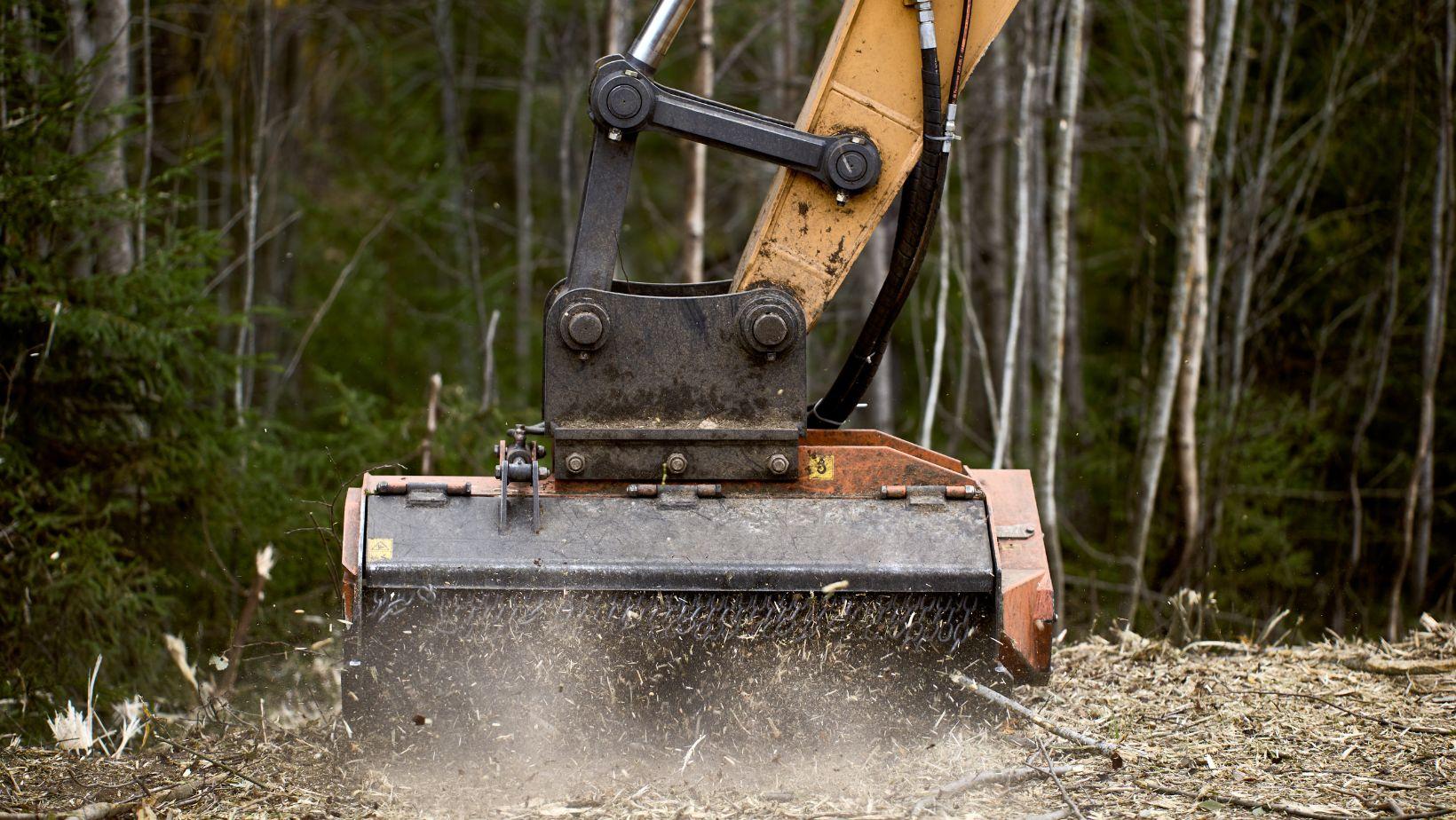
Before getting into the numbers, it helps to understand what you are actually paying for. Forestry mulching is a single-machine land clearing method where a specialized piece of equipment cuts, grinds, and mulches trees, brush, and stumps all in one pass. The resulting mulch stays on site as a natural ground cover that helps with erosion control and soil health.
Because one machine handles the entire job from start to finish, there is no separate crew hauling debris, no stump grinder coming back for a second visit, and no burn pile to manage. That efficiency is a big part of what makes forestry mulching cost-competitive with traditional land clearing methods, even though the hourly equipment rate can be higher.
Average Cost Range for Forestry Mulching in Michigan
Most forestry mulching jobs in Michigan fall somewhere in the range of $150 to $500 per acre for lighter vegetation, and can go higher for dense tree cover or challenging terrain. Some companies charge by the hour rather than by the acre, with rates typically landing between $150 and $300 per hour depending on equipment size and project complexity.
For a small residential lot with moderate brush, you might be looking at a few hundred dollars total. For a 10-acre parcel with thick second-growth timber, you could be looking at several thousand. The range is wide because the variables are wide, which brings us to what actually drives the price up or down.
6 Factors That Affect Forestry Mulching Costs in Michigan
1. Size of the Property
This one is straightforward. More acreage means more machine hours, and more machine hours means a higher total bill. However, larger jobs often come with a lower per-acre rate because the equipment mobilization cost gets spread across more work. A one-acre job and a ten-acre job will not cost ten times as much, but the larger job will almost certainly have a better price per acre.
2. Density and Type of Vegetation
Light brush and small saplings are much faster to mulch than thick stands of mature trees. A property covered in 30-year-old hardwood trees takes significantly more time and puts more wear on the equipment than a field overgrown with scrubby brush and vines. Companies will factor this in when quoting your job, which is why an on-site evaluation is so important before any numbers get attached to a project.
3. Terrain and Ground Conditions
Michigan has a lot of variety in its landscape. Flat, dry ground is easy to work on. Wet, marshy land or steep slopes slow the equipment down and increase the risk of getting stuck or damaging sensitive areas. Properties near lakes, rivers, or wetlands may also come with additional care requirements to stay compliant with Michigan's environmental regulations around water resources, which can affect how the job is approached and priced.
4. Tree Size
There is a real difference between clearing a property covered in 4-inch diameter trees versus one with trees that are 18 to 24 inches across. Larger trees require more passes, put more stress on the mulching head, and take longer to process. If your land has significant timber, expect that to show up in the quote.
5. Accessibility and Travel Distance
Getting large equipment to a remote parcel in northern Michigan is more expensive than rolling it down the street to a suburban lot. Mobilization fees, which cover the cost of transporting equipment to and from your property, are a real part of the total price. Properties that are difficult to access with a trailer add time and fuel, and that cost gets passed along.
6. Scope of Work
Are you clearing everything, or do you want certain trees preserved? Do you need the perimeter cleaned up more carefully than the interior? Selective clearing takes more attention and more time than a straight full-clearing job. The more specific your requirements, the more that needs to be factored into the estimate.
Why Forestry Mulching Often Costs Less Than It Seems
A lot of people look at the hourly or per-acre rate for forestry mulching and immediately compare it to a quote they got for traditional clearing. But that comparison usually leaves out several costs that pile up on the traditional side.
With conventional land clearing, you typically pay for the equipment doing the cutting, then separately for debris hauling, then again for stump grinding. If erosion control becomes necessary after the bare soil is exposed, that is another cost. Forestry mulching bundles everything into one process, and the mulch left behind actually does useful work for your property. When you add everything up, the gap between the two methods is often a lot smaller than it first appears.
You can also get a sense of what the full process involves by reading up on how land clearing projects are typically scoped and priced before reaching out to a contractor, which can help you ask better questions and compare quotes more accurately.
What You Should Expect From a Good Quote
A reputable forestry mulching company in Michigan will not give you a final price over the phone without seeing your property. They will schedule an on-site walk, assess the vegetation, terrain, and acreage, and then put together a detailed estimate that outlines what is included.
Be cautious of companies that skip this step. Land clearing is a job where conditions matter enormously, and a quote built on guesswork tends to either come in way over budget or invite unpleasant surprises once work starts.
Also ask whether the quote is all-in or whether there are potential add-ons. Some companies quote the mulching itself and then add separate line items for stump removal or edge cleanup. Understanding the full scope of what is covered saves you from sticker shock at the end.
Is Forestry Mulching Worth It for Your Michigan Property?
For most residential and recreational land owners in Michigan, yes. Whether you are prepping a building site, improving a hunting property, clearing a trail, or just reclaiming an overgrown lot you have been ignoring for years, forestry mulching gets the job done cleanly and efficiently without leaving your land looking like a construction zone.
The mulch that stays behind is not just a byproduct. It protects topsoil, helps hold moisture during dry stretches, and breaks down over time to feed the ground naturally. For a state with as much wetland, sandy soil, and variable terrain as Michigan has, that erosion protection is genuinely valuable.
Getting an Accurate Estimate
The best way to know what your specific project will cost is to get an on-site evaluation from a qualified company. Prices vary across Michigan, and your property's unique combination of size, vegetation, terrain, and location will determine your final number more than any average figure will.
Do not let a lack of upfront pricing stop you from getting started. Most reputable companies offer free estimates and will walk the property with you so you know exactly what you are agreeing to before any work begins.
Your land has potential. Forestry mulching is often the fastest and cleanest way to unlock it.