

You finally conclude that you want to build a deck. You imagine the weekend barbecues, the evenings spent in quiet outdoors, and a place that feels just like an extension of your house. But then reality hits: there are so many wood options, price ranges, and opinions that it suddenly seems daunting to pick the right one.
Here’s the secret: the best wood deck is not about choosing the most expensive model or the one your neighbor used. It is all about selecting a material that suits your lifestyle, climate, finances, and future aspirations. The wrong choice can lead to constant repairs, fading, warping, or regret just a few years down the line.
This guide will show you how to select the best wood deck for your home without breaking a sweat or feeling confused. By the end, you will know exactly what to seek and what to shun.
1. Understand Your Outdoor Lifestyle and Deck Purpose
One factor to consider before settling on any decking material is how you’ll use your outdoor area, or whether you live in a residential neighborhood where decks can be used in various ways throughout the year. Some homeowners wish to have a deck primarily to enjoy a relaxing evening and to have a bit of light seating. In contrast, others intend to have family parties, cookouts, or even seasonal events that will strain the structure.
Your daily habits matter here. Foot traffic, furniture, pets, and even how often the deck is exposed to sun or moisture all influence which wood type will perform best over time. Wood that is good for occasional use can wear out easily in a busy family, so it might need to be repaired earlier than expected.
Local conditions also play a role. For instance, the climate of homes in Leawood, Kansas, is characterized by changing seasons, temperature, and moisture conditions, which means the materials used on the deck should be selected based on the lifestyle and environment.
That is why, when homeowners research the best wood deck Leawood KS, they sometimes focus on the materials that balance durability, comfort, and long-term performance for their local conditions.

2. Explore Popular Wood Decking Options and Their Differences
Wood decks are not all made equal. Different types have their advantages, disadvantages, and personalities.
One of the most popular options is pressure-treated wood, as it is inexpensive and widely available. It is coated to resist rot and insects, making it very practical in most homes. Nonetheless, it should be regularly maintained. If not, it might warp or crack over time.
Cedar and redwood are known for their natural beauty and resistance to decay. They are full-bodied and smoother to the feet. They are also softer woods, thus are likely to dent easily and may cost more.
Hardwoods such as the ipe, which grow in the tropics, are very dense and strong. They are resistant to moisture and insects and durable. The trade-off? High initial price and complicated installation.
Knowledge of such differences will ensure that you do not make your choice based on appearance.
3. Consider Durability, Climate, and Weather Resistance
The weather where you live is significant to your deck’s performance over time. Wood will respond differently depending on changes in sun exposure, humidity, rainfall, and temperature.
If you live in a wet or humid area, moisture resistance becomes critical. Some woods naturally keep water off, and do not require frequent sealing to maintain a non-rot and non-mold appearance. In dry and sunny areas, UV can fade and crack the wood unless it’s suited for it.
Here’s another thing most homeowners fail to consider: the best wood in one climate may not perform well in another. Selecting a wood that fits your surroundings helps reduce maintenance and extend your deck’s lifespan.
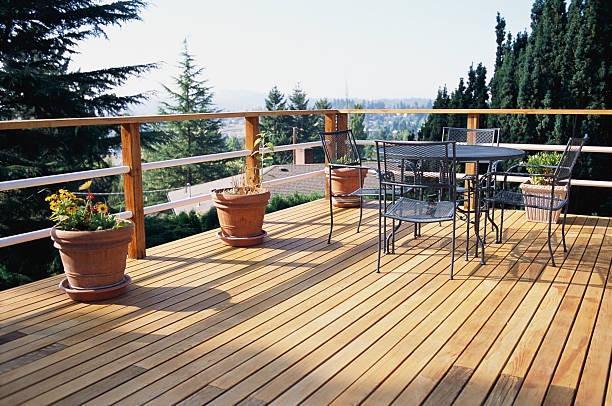
4. Balance Maintenance Needs With Your Schedule and Budget
Every wooden deck requires upkeep. The question is, how much time and energy are you ready to spend?
Some woods require annual sealing or staining to maintain their appearance and strength. Others naturally age well with minimal intervention. If you enjoy hands-on care and don’t mind routine upkeep, you’ll have more flexibility in your choice.
However, maintenance is not merely a matter of effort; it is also a matter of cost. Regular cleaning, repairs, and treatments add up over time.
If your schedule is already busy, you would save money and stress in the long run by selecting a wood that requires little attention. An ideal wood deck is the one you can afford to maintain, not the one that would be a burden.
5. Compare Costs Beyond The Initial Price Tag
It’s easy to focus on upfront cost, but that’s only part of the story. Some wood decks are less expensive to install but need frequent maintenance or replacement. Others are more expensive at the outset, but they last for decades with few problems.
Considering maintenance, repair, and lifespan, the more expensive option might be cheaper in the long run. Think long-term. Ask yourself how many years you intend to remain in your house and how much you intend to invest in upkeep.
A deck is not a short-term purchase; it’s an investment in your property and lifestyle. The takeaway? The ideal wood deck can strike a balance between upfront affordability and long-term value.
6. Sustainability, Sourcing, and Eco-Friendly Choices
More homeowners are thinking about where their materials come from—and for good reason. Responsibly sourced wood supports sustainable forestry and reduces environmental impact. Certified options help ensure forests are appropriately managed and replenished over time.
But wait! There’s more. Sustainable wood is not only better for the planet; in many cases, it also meets higher quality requirements. By selecting conscious materials, you are putting your money into quality and comfort.
If sustainability is a concern for you, ask suppliers about their certifications and sourcing practices, and decide accordingly.
Building A Deck You’ll Love Living With
Choosing the best wood deck for your home isn’t about finding a “perfect” option, but about finding the ideal one for you. It becomes much easier and, more importantly, takes less stress when you think about your lifestyle, climate, the tolerance of maintenance, appearance preferences, and the cost factors in the long run.
The appropriate wood selection will result in fewer repairs, greater enjoyment, and a place people can be proud to use daily. Take your time, weigh your options, and choose with confidence.
Because when your deck truly fits your home and lifestyle, it ceases to be a project and becomes the place where memories are made.