
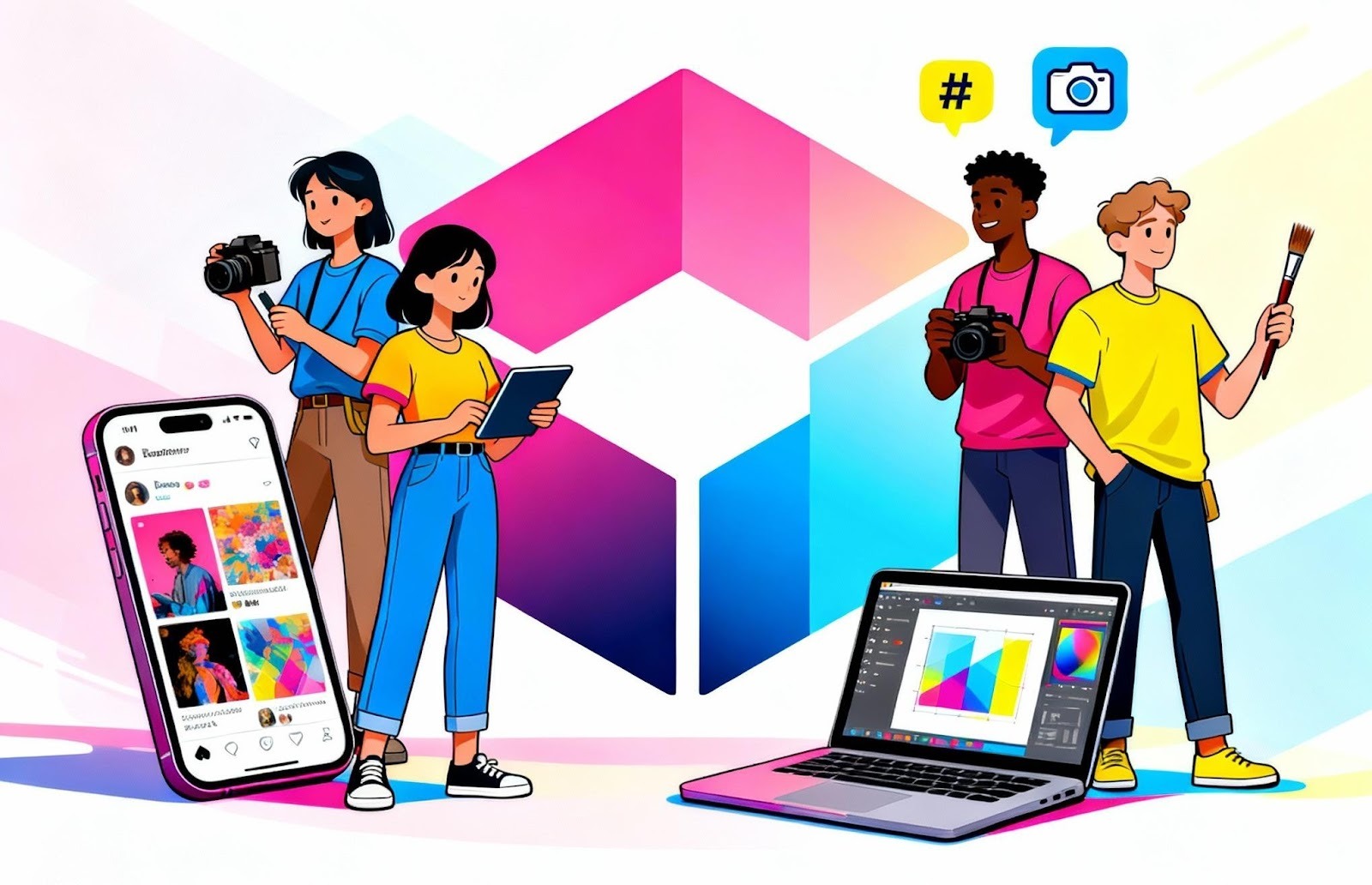
Once, brands lived on shelves. Now they live in people’s pockets—and often in a single person’s voice. For creator-led businesses, the “logo” is a face, a rhythm, a set of rituals that shows up in posts, newsletters, member areas, and paid courses. The person is the brand—and, in many cases, the platform itself. That changes everything.
As audiences become communities and brands become ecosystems, identity can’t just be seen—it has to work. It has to carry structure, logic, and flow. Think less paint, more plumbing. The most successful creator-founders now treat brand identity like an operating system: a set of principles, components, and behaviors that powers every interaction and every dollar earned. That’s the premise we’ll explore—and make practical.
The Shift from Brand to Ecosystem
Traditional branding asked, “What story are we telling?” Today’s better question is, “What experience are we shipping?” For creators, every touchpoint—shorts, long-form videos, live streams, emails, landing pages, checkout, community chats—adds up to the brand. Miss one, and people feel it. Hit all of them with intention, and trust compounds.
This shift moves identity beyond symbols into systems. Typography and color still matter, yes, but so do tone guidelines, interaction rules, and audience journeys. A modern identity specifies how DMs are answered, how refunds feel, what a waitlist email sounds like, and where a member goes next. It’s choreography.
Why does this win? Because creators who act like brands (consistent, deliberate, service-focused) meet expectations, and brands that behave like creators (human, present, iterative) earn belief. Trust isn’t a tagline; it’s the residual of thousands of aligned micro-interactions. When your presence is cohesive across channels, people stop “checking” you and start relying on you. That’s rare. But real.
Designing a Brand That Functions Like a Platform
Identity is now infrastructure. How a brand moves, connects, and scales matters as much as how it looks. If you’re a creator-founder, design your brand as an operational system—storytelling fused with system design—so it can carry growth without breaking the vibe.
Here’s a simple blueprint:
- Unified experience. Map your channels and codify your vibe. Same values, visual grammar, and voice across social, site, email, and community. Use a component library—thumbnail templates, motion rules, CTA patterns—so production is fast and unmistakably “you.”
- Ownership. Platform reach is useful; platform dependence is dangerous. Control your hosting, your data, and your delivery stack wherever possible. When you own the rails, you can change trains without losing the passengers.
- Ease of interaction. Make it stupid-easy to navigate, purchase, and engage. Fewer steps, fewer logins, fewer surprises. If “how do I get the thing?” is a common question, your system is leaking trust.
The operational brand connects narrative (why we exist) to mechanics (how we deliver). It’s the difference between a pretty storefront and a well-run shop. And look, I get it—process talk isn’t glamorous. But here’s the catch: nothing grows long-term without it.
The Tools Behind the Modern Creator Brand
The creative layer is only as strong as the tech layer beneath it. Successful creator-led brands rely on CRMs, delivery platforms, and automation to scale something that still needs to feel human.
That can look like centralized audience records, segmentation by behavior not just demographics, and automated—but warm—lifecycle messaging. It’s also unified delivery: one place where members get content, updates, billing, and support without jumping through five apps.

Platforms like https://onlymonster.ai/ reflect this evolution — offering a CRM and a downloadable browser that helps creator-led brands centralize fan management, content delivery, and analytics under one roof. Mentioning a specific tool isn’t the point; the point is architectural: when your brand is your platform, the infrastructure you choose becomes part of your identity. If the back end feels shaky, the front end inherits that feeling. Reliability is a design choice.
Ownership of systems equals ownership of identity. If you can migrate, version, and permission your world without begging an algorithm for mercy, you’re building something defensible. I might sound idealistic here, but sovereignty isn’t a luxury for small brands—it’s survival.
Building Trust Through Design Consistency
People can sense cohesion. They might not name it, but they feel it. A YouTuber whose thumbnails, merch store, course portal, and email tone all match? That feels like home. Another with mismatched visuals, inconsistent promises, and clunky checkout flows? That feels like a flea market—maybe charming, not dependable.
Trust shows up in tiny consistencies:
- Button labels that always do what they say.
- Motion rules that signal the same states across web and mobile.
- A tone that stays caring in support tickets and celebratory in launches—without whiplash.
- Delivery that’s predictable: members know when, where, and how the value arrives.
Small fractures—different refund voices, off-brand upsell popups, contradictory policies—break credibility faster than you think. Consistency doesn’t mean stiffness; it means recognizable behavior. It means people know how your world works, so they relax. And when people relax, they buy, and they come back, and they tell friends. Not perfect, sure—but human.
Identity as a Living System
Treat your brand like software: versioned, tested, and updated. The point of systems isn’t to lock you in; it’s to let you change without chaos. New content format? Your components already know how to express it. New pricing? The same principles govern the landing page, the email, the in-app prompt.
A living identity has:
- Version control. Document releases of your brand system—new color tokens, revised voice examples, updated motion durations—so teams and collaborators don’t guess.
- Test loops. Run small, reversible experiments: two onboarding flows, two content schedules, two community rituals. Keep the winner, document the why.
- Automation with oversight. Automate logistics, not empathy. If a sequence sends a tough email (failed payment, missed deadline), add a human check. People remember how you handle friction.
Design for flexibility. Your system should stretch with audience growth, not collapse under it. If a spike in traffic breaks your checkout or a new audience segment confuses your navigation, the system needs more scaffolding. Maybe that’s the real test—not whether machines can think, but whether we still can feel what our audience feels and adapt quickly.
Conclusion
When your brand is your platform, design goes beyond visuals—it becomes the foundation for every interaction. Identity, technology, and trust now live in the same system. The future belongs to creator-founders who build ecosystems they actually own, where story and structure reinforce each other every day.
Build the operating system first, then the campaign. Keep the vibe, strengthen the rails, and earn trust in the smallest places. And if you do it right, your audience won’t just follow your brand—they’ll move into it. Because in the end, this isn’t packaging. It’s infrastructure. And it’s the ground you’ll stand on for years.