
Automotive culture has long been about more than just transport. For many drivers, a car represents identity, taste, and a deeply personal connection to design. Increasingly, that same mindset is finding its way indoors. Homes are no longer separate from automotive passion—they’re becoming an extension of it.
From subtle nods to full-scale design statements, decorating with automotive influences is emerging as a distinctive trend among enthusiasts who want their living spaces to reflect the same personality as their vehicles.
The Garage Aesthetic Moves Inside
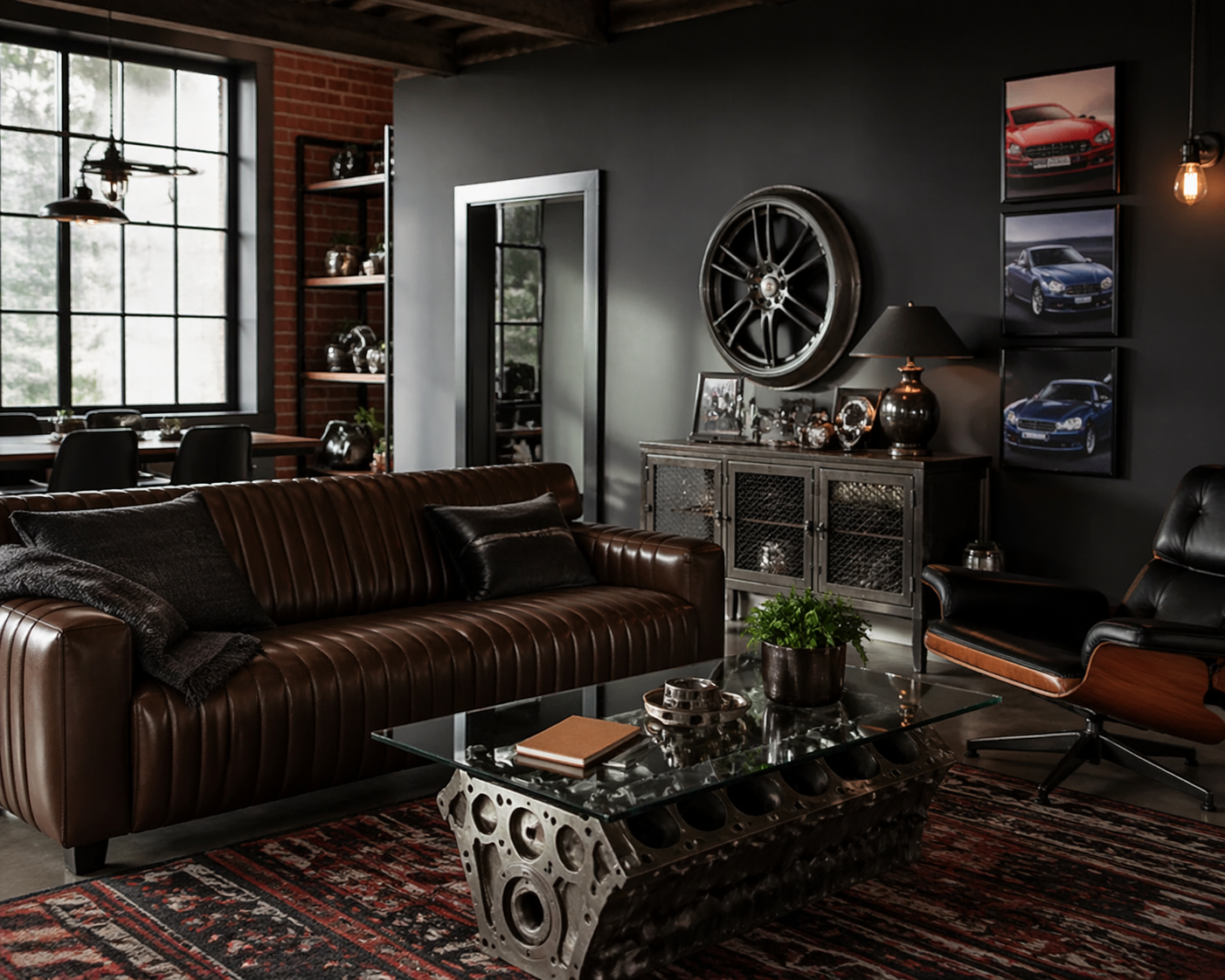
What was once confined to garages and workshops is now influencing living rooms, offices, and even kitchens. Materials commonly associated with cars—brushed metal, exposed steel, carbon fibre textures, and leather—are being reinterpreted as interior design elements.
Coffee tables built from engine blocks, shelving inspired by industrial tool storage, and lighting fixtures modelled after headlights are no longer niche. They sit comfortably within modern interiors, especially those leaning toward industrial or minimalist styles.
This shift reflects a broader change: the garage is no longer just a functional space. It’s becoming a lifestyle reference point.
Personalisation Beyond the Driveway
Car culture in 2026 is heavily defined by personalisation. From paint finishes to interior trims, drivers are investing more in making their vehicles unique. It’s only natural that this thinking extends into the home.
Wall art featuring classic cars, framed technical drawings, or even abstract interpretations of automotive forms can create a strong visual identity. Meanwhile, bespoke furniture pieces—often handcrafted—allow enthusiasts to incorporate meaningful elements without overwhelming a space.
Interestingly, even smaller details are gaining traction. Subtle decorative touches, such as repurposed automotive components or design motifs inspired by dashboards and instrumentation, can create cohesion between a person’s vehicle and their living environment.
The Psychology of Automotive Design at Home
There’s a psychological element at play. Cars often represent freedom, control, and aspiration. Bringing automotive influences into the home can reinforce those feelings in a more permanent setting.
Clean lines, symmetry, and precision—hallmarks of automotive design—translate well into interiors that feel structured and intentional. For many, it’s less about showcasing a hobby and more about surrounding themselves with design language they already connect with.
This also explains the rise of curated, rather than cluttered, automotive décor. The emphasis is on quality, storytelling, and emotional resonance, not volume.
Social Media and the Rise of Aesthetic Identity
Platforms like Instagram and Pinterest have accelerated the blending of automotive and interior design cultures. Enthusiasts now share not only their cars but also how those vehicles influence their wider lifestyle.
A well-designed home garage setup, for instance, often transitions seamlessly into adjacent living spaces. The visual continuity—matching colour palettes, materials, and lighting—creates a cohesive aesthetic that resonates strongly online.
This visibility has helped normalise automotive-inspired interiors, pushing them from niche interest into a broader design movement.
Subtle Statements vs. Bold Features
Not every automotive-inspired home needs to be overt. In fact, some of the most effective designs are understated.
A single statement piece—like a vintage steering wheel mounted as art or a sleek, automotive-inspired desk—can define a room without dominating it. On the other end of the spectrum, some homeowners embrace bold installations, such as full wall murals of iconic cars or furniture crafted from actual vehicle parts.
The key lies in balance. Much like car customisation itself, successful interior design is about knowing when to enhance and when to hold back.
Where Number Plates Fit In
Among the more versatile elements of automotive décor are number plates. Their clean typography, reflective surfaces, and cultural associations make them surprisingly adaptable within interiors.
For some, they serve as graphic design pieces—minimal, structured, and visually striking. For others, they carry personal or nostalgic value, referencing journeys, milestones, or identity.
It’s within this broader context of personalisation that companies like Number 1 Plates are seeing increased interest—not as a focal point of design, but as part of a wider ecosystem where drivers seek to express individuality both on and off the road.
The Future of Automotive-Inspired Living
As vehicles themselves become more design-focused—particularly with the rise of EVs and digitally integrated interiors—the influence on home environments is likely to grow stronger.
We’re already seeing crossover in areas like ambient lighting, user interfaces, and material innovation. The boundary between automotive and interior design is becoming increasingly fluid.
Looking ahead, the homes of enthusiasts may feel less like separate spaces and more like an extension of their driving experience—connected by a shared language of design, technology, and personal expression.
Conclusion
Decorating your home with automotive influences isn’t about replicating a showroom or filling a space with memorabilia. It’s about translating the essence of automotive design—precision, individuality, and emotion—into a living environment.
Whether through subtle accents or bold statements, the result is a space that feels authentic. A home that doesn’t just reflect how you live, but how you drive.