
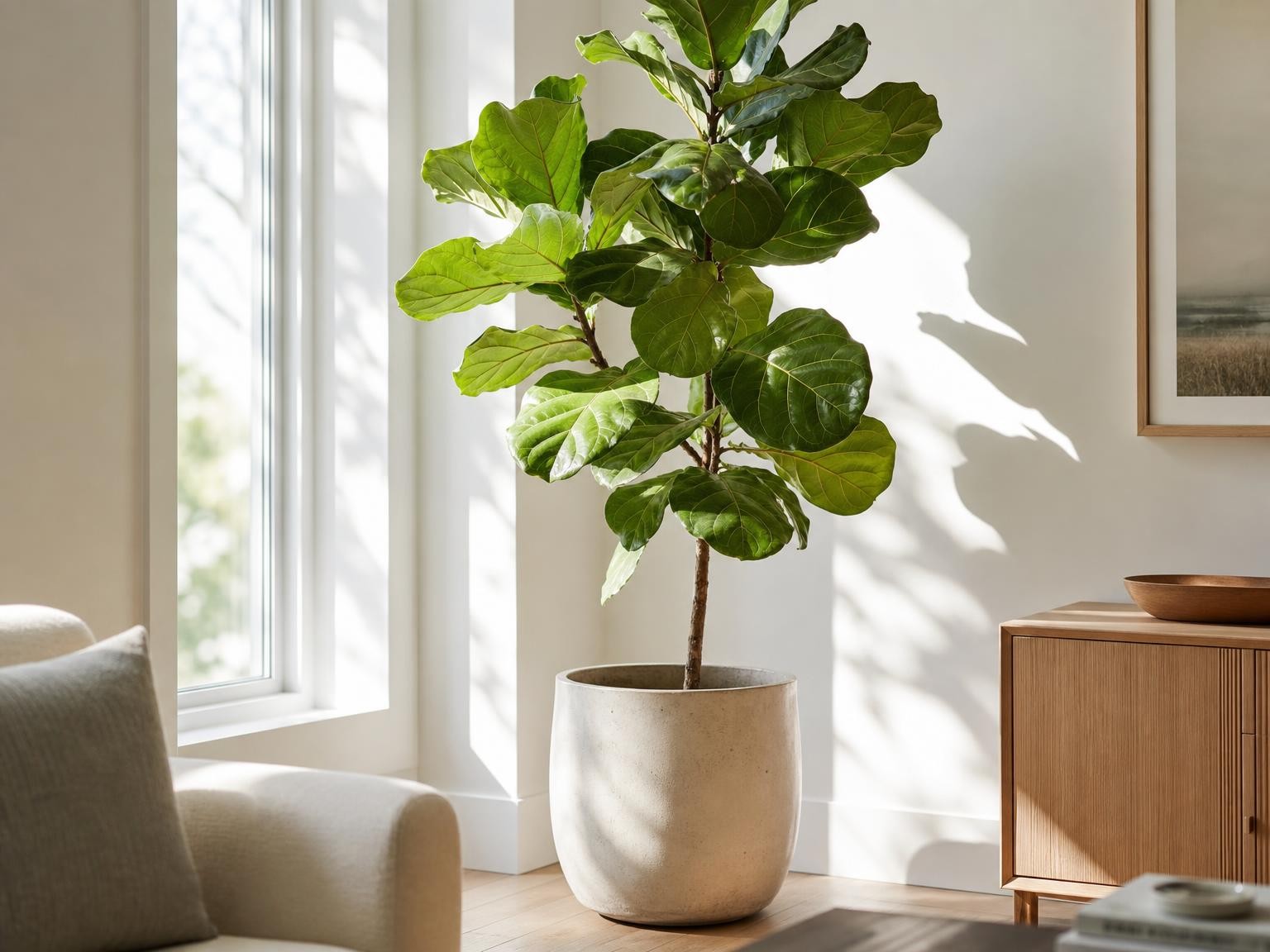
Large indoor plants act as a kind of living architecture. They redirect how light travels across a room, soften hard edges and corners, and lend a sense of scale that furniture alone rarely achieves.
Table of Contents
ToggleUnderstanding Scale: Why Plant Size Matters in Interior Design
Whether you’re bringing in a huge indoor plant to anchor a living room or arranging a cluster of medium-sized plants along a shelf, the right greenery can reshape a space without any renovation at all. This article walks through choosing a plant of the right size, understanding its light and care requirements, and using deliberate placement to turn it into a lasting design feature.
Every plant has what designers call visual weight—the sense of mass and presence it lends to a room. Tall or wide plants can offset high ceilings, fill awkward corners, or pull the eye upward in a way that small potted herbs simply can’t manage.
Plants generally fall into three categories:
- Tabletop plants – small accents for shelves or desks
- Medium floor plants – supporting elements that fill gaps
- Oversized houseplants – primary focal points that anchor a room
A single tall plant placed near a window can soften an otherwise minimalist living room, making the ceiling feel higher and the space feel more intentional.
Matching Large Plants to Your Space and Light Conditions
Assessing Light Before You Buy
Light availability is, without question, the most important factor in keeping a large plant healthy over the long haul. Indoor light is typically described as sunny, bright indirect, medium, or low, depending on a room’s distance from windows and whether curtains filter incoming sun. Many statement plants do best in bright, indirect light—think a spot a few feet back from an east- or south-facing window. Rather than guessing, it helps to observe how shadows shift throughout the day, or use a simple light meter app, before settling on a placement.
Choosing Species That Fit the Environment
Broadly speaking, plant options fall along a light spectrum:
- Bright, indirect light: bird of paradise, fiddle-leaf fig, rubber plant
- Medium light: umbrella tree, certain palms, Chinese evergreen
- Lower light: select shade-tolerant evergreen species
Beyond light, it’s worth factoring in a plant’s mature size—both height and spread—so it doesn’t eventually crowd doorways, block vents, or narrow walkways.
Practical Care Basics for Oversized Indoor Plants
Watering and Soil: Avoiding Common Mistakes
Large container plants tend to suffer more from overwatering than from neglect. Pots without drainage holes trap excess moisture and set the stage for root rot. Before reaching for the watering can, try a few simple checks:
- Insert a finger an inch or two into the soil
- Lift the pot to gauge its weight
- Check whether the top layer of soil feels dry to the touch
Most large tropical houseplants prefer soil that stays evenly moist without ever turning soggy. A familiar scenario: a large fig or palm gradually yellows and drops leaves from chronic overwatering, then bounces back once drainage improves and watering slows down.
Light, Humidity, and Temperature
Once a plant is settled into its spot, resist the urge to move it around too often—inconsistent light exposure can stress it out. Grouping plants together, setting out pebble trays with water, and keeping some distance from heating vents or drafty windows all help maintain steady humidity and temperature.
Repotting and Long-Term Maintenance
Roots emerging from drainage holes or a pot that’s grown top-heavy are both signs it’s time to repot. Choose a new container only slightly larger than the current one—oversizing it invites excess wet soil—and make a habit of checking leaves and the soil surface for pests during routine care.
Design Strategies: Positioning Large Plants for Maximum Impact
Creating Focal Points Without Clutter
One or two well-placed large plants often carry more visual punch than a handful of small ones scattered around a room. Good spots include empty corners, beside low seating, or near a window seat—places where height plays nicely against the surrounding furniture.
Using Plants to Define Zones and Movement
Tall plants can also serve as soft dividers in open-plan spaces, marking, say, the boundary between a living area and a home office. Just keep traffic flow in mind—avoid setting a large pot where people walk frequently or where a door needs to swing open.
Complementing Style and Materials
Leaf texture and growth habit play off a room’s overall style: broad leaves suit bold, modern interiors, while fine, feathery fronds fit softer, more eclectic spaces. Opt for stable, well-draining containers over purely decorative ones—your plant’s health depends on it.
Key Takeaway: Successful placement balances aesthetics, available light, and practical foot traffic considerations.
Safety, Accessibility, and Long-Term Planning
Stability matters, particularly in homes with kids or pets, where a tipped-over pot can mean anything from a mess to an injury. Some species are toxic if ingested, too, so it’s worth checking a reputable plant toxicity resource before bringing one home if curious pets or young children are part of the picture.
For accessibility, keep large plants within easy reach for pruning, dusting, and watering. And don’t forget that plants grow—a compact sapling today may need an entirely different footprint a few years down the line, so it pays to plan placement with future size in mind.
Bringing It All Together: Creating a Sustainable Green Feature in Your Home
Choosing the right plant starts with a clear read on your space’s light and layout, followed by attention to drainage, consistent watering, and appropriate potting. Placed thoughtfully, a single oversized plant can become a long-term design feature rather than a short-lived experiment that fades within a season.
Key Takeaways:
- Match plant choice to your room’s actual light conditions
- Prioritize drainage and balanced watering to avoid root rot
- Plan placement around safety, accessibility, and future growth
Before choosing a plant, spend some time studying one room in your home—its light, its traffic patterns, its empty spaces—and think about where a large-scale plant might not only survive, but genuinely enhance the room’s character.