
A first click rarely feels important to the person who makes it. The action takes a fraction of a second and often happens without much thought. Yet that moment sets expectations and shapes future behavior. Design determines how people react after that click, how long they stay, and whether they return. Thoughtful design does not rely on decoration or trend-driven visuals. It focuses on clarity, consistency, and respect for user intent.
The Piper Spin Platform: How Thoughtful Design Increases Engagement
Users arrive with specific goals, whether they want quick access to entertainment, to explore a vast library of games, or to participate in ongoing challenges. The https://thepiperspin.com/ interface positions key elements where users expect them, reducing effort and uncertainty. Visitors see clearly labeled sections for missions, tournaments, and rewards without digging through menus. That structure supports faster comprehension and reduces hesitation when deciding what to explore next.
Beyond a basic layout, the platform emphasizes interactive features that prompt engagement. Challenges and missions unfold as users play, giving them small, immediate goals that connect to longer-term involvement. They do not simply scroll through options; they engage with mechanics that reward progress over time. This way of presenting content aligns design with user behavior.
Another strength lies in responsive design that adapts to desktop and mobile screens alike. The interface scales cleanly and keeps controls accessible regardless of device type. This consistency in presentation reduces mistakes and aligns expectations across contexts. That clarity positively influences how users feel about the experience, encouraging them to return.
The platform also includes transparent support and feedback channels. A visible support option and multilingual assistance tools reduce uncertainty and provide reassurance. Users can resolve issues quickly when they interact with clear, direct pathways to help.
The first click sets the tone
Users arrive with a goal. They want information, entertainment, or a specific action. The interface either supports that goal or creates friction. Layout, spacing, color contrast, and text hierarchy all affect how quickly someone understands where to look next.
When a page answers questions fast, users feel in control. When it forces them to search, they lose patience. Designers shape this experience through structure rather than persuasion. Clear headings, readable text blocks, and predictable patterns reduce mental effort. People tend to reward such experiences with longer sessions and repeat visits.
Clarity over complexity
Complex layouts often signal effort rather than value. People respond better to interfaces that communicate purpose without explanation. Clear design does not mean minimal design. It means intentional choices that guide attention.
Key principles that support clarity include:
- Consistent placement of interactive elements
- Strong contrast between text and background
- Predictable behavior of buttons and links
- Limited number of focal points per screen
Each point supports faster comprehension. Users act with confidence when they do not need to guess.
Trust grows through consistency
Trust does not appear instantly. It builds through repeated interactions that meet expectations. Design consistency plays a central role in this process. When colors, typography, and spacing remain stable across pages, users sense order. When interactions behave the same way each time, people feel safe to explore further.
Trust also depends on transparency. Interfaces that hide information or surprise users with sudden changes damage confidence. Clear labels, visible system feedback, and honest prompts reduce uncertainty. Over time, these signals encourage return visits.
Emotional response follows usability
Design influences emotion, but not through decoration alone. Usability drives most emotional reactions. Smooth interactions reduce frustration. Logical flows reduce stress. Fast feedback supports satisfaction.
Designers often focus on visual appeal, yet function shapes feeling more strongly. Users rarely praise color palettes when tasks fail. They remember how easy the process felt. That memory influences loyalty more than any stylistic choice.
Micro-decisions shape long-term behavior
Every session includes dozens of small decisions. Users decide where to click, whether to scroll, and when to leave. Design either simplifies these decisions or complicates them. Thoughtful design reduces choice overload and highlights the next logical step.
Consider how spacing, alignment, and button size affect behavior. These details may appear minor, yet they influence accuracy and speed. Over time, reduced effort leads to habit. Habit leads to loyalty.

Content and design must work together
Design cannot compensate for unclear content. Text structure, tone, and placement affect comprehension. Short paragraphs, descriptive subheadings, and direct language support scanning. Users often skim before they commit to reading.
When design supports content hierarchy, people locate value faster. That alignment matters in many contexts, including entertainment platforms, informational portals, and casino-related environments where users expect quick access and clear rules. Some discussions reference external resources such as https://thepiperspin.com/ to illustrate how structured presentation supports user confidence without overwhelming attention.
Feedback reinforces engagement
Users expect a response after every action. A click should trigger a visible result. A form submission should confirm success or explain errors. Feedback reassures users that the system noticed their input.
Effective feedback follows three rules:
- It appears immediately
- It explains the outcome clearly
- It matches the tone of the interface
When feedback follows these rules, users feel acknowledged. That feeling supports continued interaction.
Accessibility supports loyalty
Accessibility benefits everyone, not only users with specific needs. Clear contrast helps reading in bright light. Logical tab order helps keyboard users and power users alike. Descriptive labels help screen readers and also reduce confusion for new visitors.
Design teams that consider accessibility early avoid costly revisions later. More importantly, they create experiences that respect a wider audience. Respect encourages return visits.
Performance affects perception
Slow interfaces test patience. Load time directly affects bounce rates and session length. Users associate speed with competence. Even small delays influence perception.
Design decisions affect performance. Heavy graphics, excessive animations, and uncompressed assets slow pages. Thoughtful design balances visual richness with speed. Fast responses support focus and reduce abandonment.
Measuring the impact of design choices
Teams need evidence to refine design. Metrics help reveal patterns that intuition may miss. Common indicators include session duration, return frequency, and task completion rates.
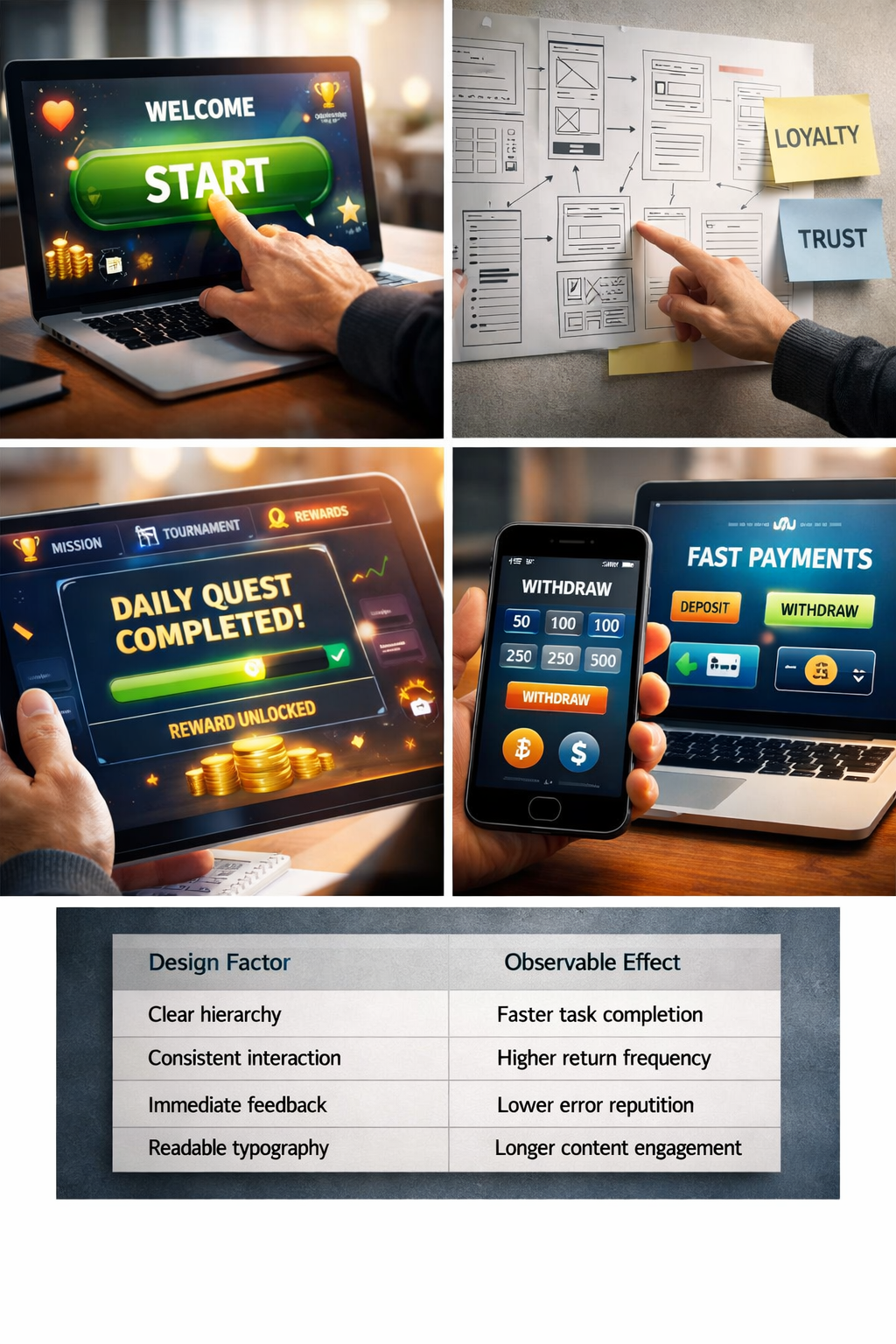
The table below shows how specific design factors relate to user behavior:
| Design Factor | Observable Effect |
| Clear hierarchy | Faster task completion |
| Consistent interaction | Higher return frequency |
| Immediate feedback | Lower error repetition |
| Readable typography | Longer content engagement |
These relationships do not guarantee outcomes, yet they guide informed decisions.
Loyalty grows from respect
Loyalty does not result from pressure or novelty. It grows when users feel respected. Design expresses that respect through clarity, predictability, and restraint. Interfaces that avoid manipulation earn trust. Trust supports habit. Habit supports loyalty.
Designers influence behavior every day through small choices. Each margin, label, and interaction sends a signal. When those signals align with user goals, people return without hesitation.
Final thoughts
Thoughtful design shapes the path from the first click to long-term commitment. It reduces friction, supports understanding, and builds confidence over time. Rather than chasing trends or dramatic visuals, effective design focuses on how people think and act.
Loyalty reflects accumulated experiences. Design determines whether those experiences feel easy or frustrating. Teams that prioritize clarity, consistency, and usability create environments where users choose to return.