
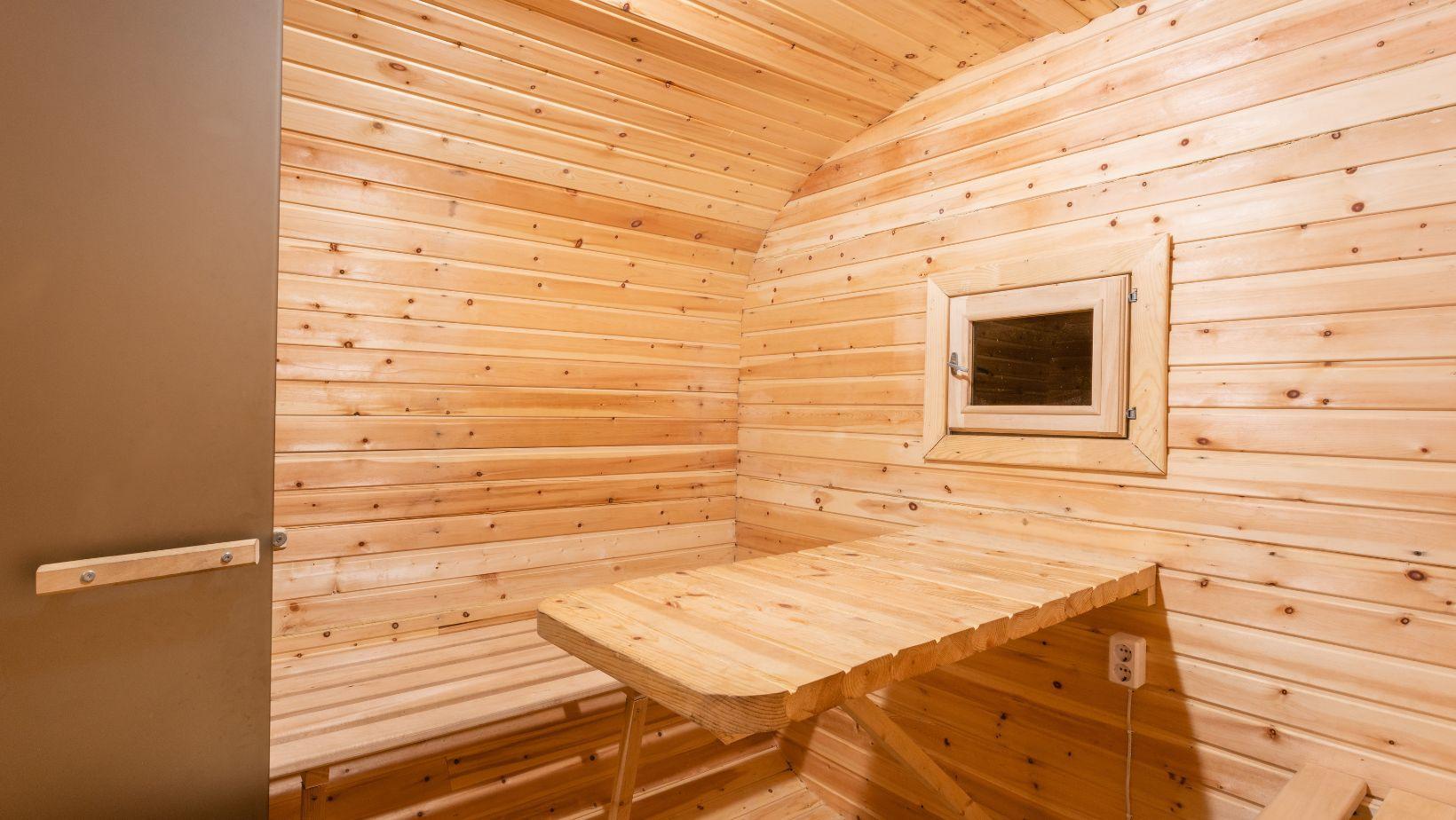
Designing a luxury home sauna means you need to find the right feel, smart ideas, and make heat work well in the space. The heater gives power to the spa room. But what wood you use shapes the feel, helps the room last longer, controls how warm or cool it gets, keeps people safe, and makes the room feel good to be in. A sauna runs at very high heat. This is often more than 180°F (82°C). That heat makes the air get wet and then dry, so it’s a tough place inside.
Using poor construction material may mean that your sauna will end up with walls that will warp and be uneven. They will either be overheated or break easily because they are not durable. Selecting the right type of wood for saunas requires that you consider the heat transfer capability, emission of toxic gas, and aesthetic appeal.
Key Material Properties for Sauna Lumber
When you look at timber for this, you cannot use normal lumber rules. The high heat makes this different. You need timber with special physical and chemical traits. This will help keep people safe and feel good.
- Low Thermal Conductivity: Sauna wood needs to feel safe on the skin, even when it gets as hot as 190°F. Softwood with less weight lets heat out fast, so benches and backrests stay cooler.
- High Dimensional Stability: Wood gets warm and cool many times, so it may grow or shrink. A good sauna wood will not twist, curve, or break. This helps keep wall grooves tight and safe.
- Resin and Pitch Content: Some types of wood have lots of sap. When heated, this can leak. Leaked sap can burn skin and ruin the inside look.
- Moisture & Decay Resistance: Some woods do well against getting wet and mold. They have oils in them or go through special treatments to keep their fibers safe.
Premium Wood Species: Side-by-Side Comparison
|
Wood Species |
Appearance & Grain |
Thermal Performance |
Ideal Application |
Key Advantages |
|
Western Red Cedar |
Rich reddish-brown tones, fine tight grain |
Excellent heat dissipation; stays cool to the touch |
Indoor & Outdoor Saunas |
Naturally decay-resistant, rich signature aroma |
|
Canadian Hemlock |
Light cream to straw color, uniform straight grain |
Good heat retention, steady thermal profile |
Contemporary Indoor Saunas |
Hypoallergenic and resin-free |
|
Thermo-Aspen |
Warm caramel/golden tone and subtle smooth texture |
Superior dimensional stability; zero movement |
Luxury Benches & Wall Cladding |
Non-toxic heat treatment, chemical-free, ultra-durable |
|
Thermo-Spruce |
Deep amber to bronze brown, distinct grain patterns |
Enhanced moisture resistance; low swelling |
Ceilings, Walls & Exterior Cladding |
Modern aesthetic, budget-friendly thermal modification |
The Advantages of Thermally Modified Wood
The thermal modification of timber is a latest trend in building premium spas. The wood is subjected to extreme temperatures ranging from 350°F to 425°F. This is done in special kilns, which have little oxygen and only steam.
Architectural Application Guide
Not every wood in your sauna works in the same way. If you pick the right wood for each area in the room, you will get better results.
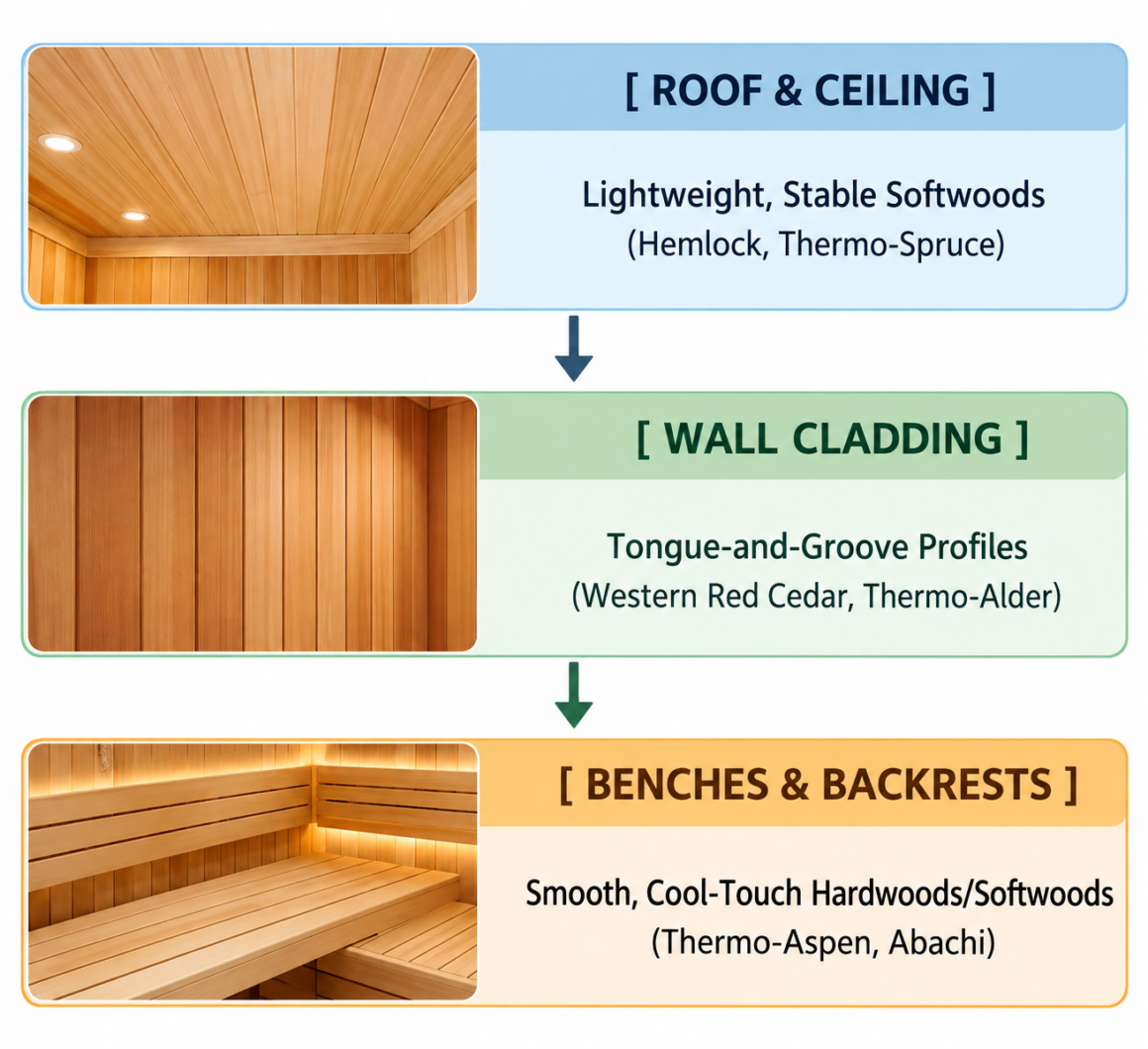
Building a Wellness Space That Lasts
Building a luxury home sauna means you need to think about the right things for safety and how long these things last. It is also good when it looks nice. When you pick wood that does not rot easily, does not hold too much heat, and lets warm air move well, you get a calm space that can help your day feel better. You may like how Western Red Cedar smells and feels, or maybe you want the strong feel of Thermowood. A good wood for saunas will give you the feel and health you want, and you can enjoy it for many years.