
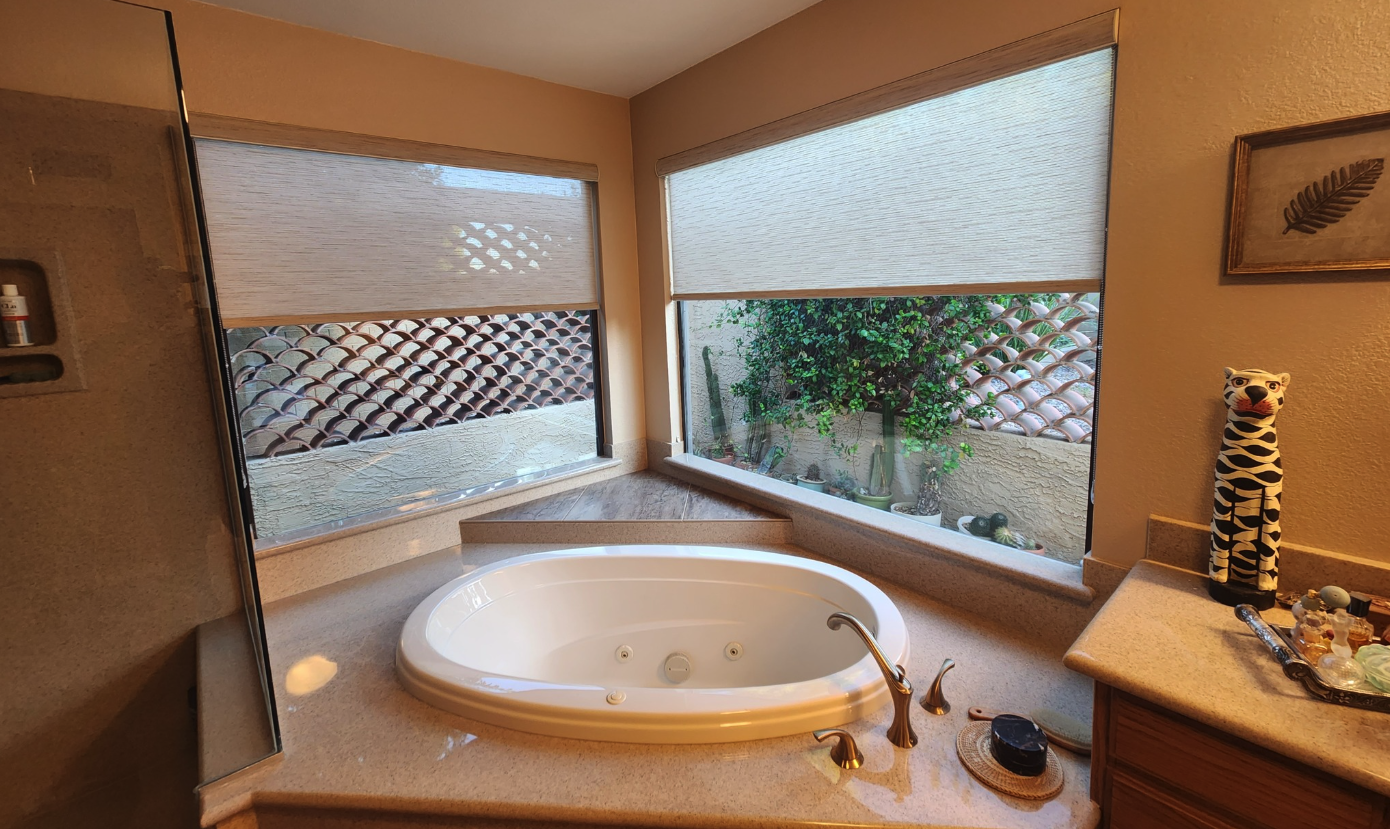
A modern room can feel right in the morning and completely different later on. In places like Phoenix and Scottsdale, the sun can change a room pretty quickly. By afternoon, the floor is throwing light back up, the space feels hotter, and the whole room can start to feel like a bit too much.
That is why blinds and shades matter more than people think. They are not just there to finish the window. They help the room stay comfortable once the light starts changing.
Start With the Room, Not the Product
A lot of people start by naming a product. They decide they want Roman shades, roller shades, or wood blinds before they really look at the room. That is usually where the mismatch begins.
It works better to step back and look at the space first. Some modern homes in Scottsdale feel very clean and sharp. They have flat cabinet fronts, pale walls, black accents, and not much texture. Others feel warmer. They use oak, stone, linen, softer whites, and rounded shapes.
Those rooms should not get the same treatment just because both are modern. One may need something that disappears into the background. The other may need something that adds a little softness.
Keep It Simple at the Window
In a modern room, the window does not need much. Heavy fabric, busy patterns, or too many folds can make the space feel off.
That is why roller shades work well in a lot of Phoenix and Scottsdale homes. They stay close to the glass and do not take over the room. In open spaces with big windows, it usually feels better than anything bulky.
The color matters too. Bright white can look too hard in desert light. Softer shades like sand, warm white, taupe, or light gray usually sit better next to stone, wood, and creamy walls.
Add Softness When the Room Feels Hard
Not every modern room needs to look crisp. Some need a little softness, especially in homes where the sun can make everything feel harder by the afternoon.
A bedroom with layered bedding, warm wood, and softer lighting may feel unfinished with a flat, plain shade. It may work, but it does not help the room much. That is where Roman shades or woven textures can make more sense. They bring in shape and a little warmth without making the space feel old-fashioned.
There is a limit, though. If the room already has a lot going on from rugs, chairs, pillows, and lighting, the windows usually look better when they stay simpler. In a lot of desert homes, the light is already strong enough. The treatment does not need to add even more visual weight.
Watch the Color in Real Light
A lot of mismatched blinds are really color problems. The style may be fine. The tone is what feels wrong.
This shows up fast in Scottsdale homes because the light is strong and clear. A white blind that looked clean in the store can look too cold once it is next to warm walls or stone flooring. A beige shade can start looking pink. A gray can lean blue once the afternoon sun hits it.
That is why samples should be looked at in the room, not just in the showroom. Put them beside the wall color, the floor, and the main furniture. Check them in the morning and again later in the day. In desert light, small color differences show up quickly.
For homes dealing with that kind of sun every day, looking at examples of blinds in Scottsdale can help narrow down what actually works in local interiors.
Let Daily Use Break the Tie
Sometimes, two options both look good. That is when real life should decide.
A bedroom may need blackout curtains. A bathroom may need privacy all day. A kitchen may need something easy to wipe clean. A living room may need filtered light more than darkness, especially if the room faces west and gets hit hard in the late afternoon. That practical side matters too, because window coverings affect comfort and heat gain, not just the way the room looks.
This is where people often choose the wrong thing. They pick what looks best in a photo, then get annoyed later. The room feels gloomy too early. The shade blocks more light than expected. The material looks nice, but feels too heavy every day. Or the treatment does not do enough, so the glare is still there, and the sofa near the window stays empty half the day.
Big Glass Changes the Decision
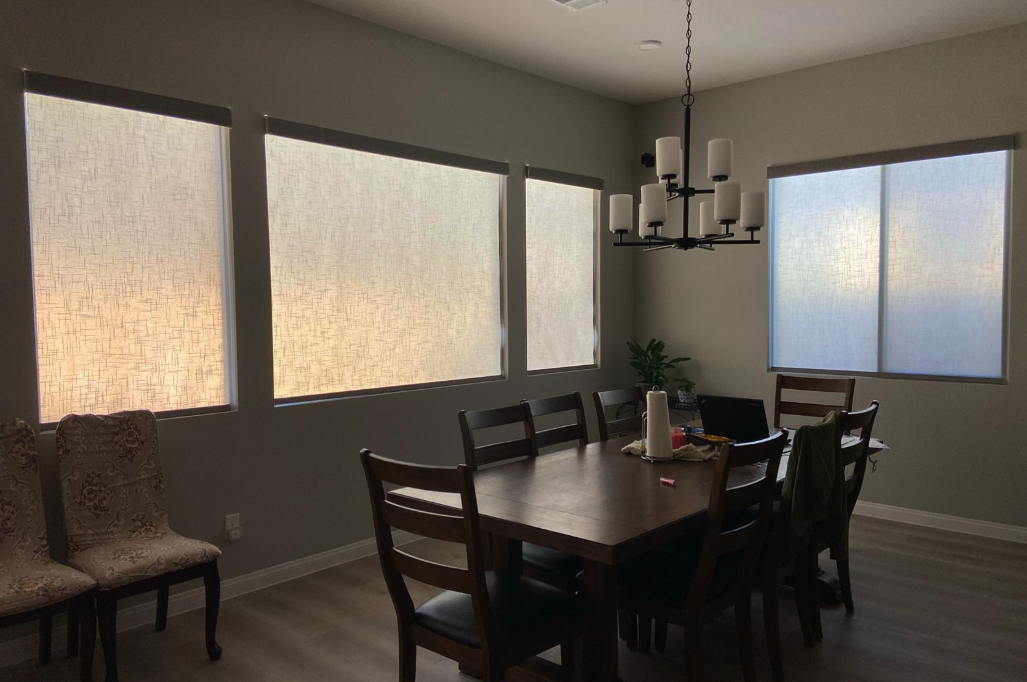
A treatment that works on one small window may look completely wrong across a wide wall of glass. That matters in a lot of newer Arizona homes, where big sliders, tall windows, and open-plan living areas are common.
Large windows usually need more restraint. Heavy treatments can make the room feel weighed down. Tiny blinds can look skimpy. In many cases, cleaner treatments work better because they let the room breathe and do not fight the architecture.
Layout matters too. If there is a bench, desk, or sofa under the window, a close-fitting shade often makes more sense than full drapery. If the wall is tall and a little bare, a softer treatment may help balance it. The size of the glass should always shape the choice.
The Whole House Does Not Need One Exact Look
A lot of people think every room should have the same blinds or shades. That can make the house feel stiff.
Different rooms have different jobs. A simple roller shade may be right in the kitchen. A bedroom may suit a softer Roman shade. A bathroom may need something more practical. That mix can still feel connected if the tones stay close and the overall look stays calm.
That usually feels better than forcing one exact treatment into every room. Homes feel more natural when each room gets what it needs.
The Wrong Choice Shows Fast
Some choices date a modern room almost right away. Heavy valances, shiny fabrics, bulky details, and overly decorative shapes usually feel out of place in clean interiors.
Bad fit is another common problem. A blind that is too narrow leaves awkward gaps. A shade hung too low can make the wall feel shorter. In strong Arizona light, those mistakes stand out even more.
Sometimes the problem is harder to name. The treatment is not ugly. It just does not belong in that room. Most people notice that right away, even if they cannot explain why.
When It Feels Right, the Room Settles Down
That is usually the best sign. The blinds or shades stop feeling like a separate decorating choice. The room just works better. The light feels softer. The heat near the glass is easier to handle. Privacy makes sense once the sun drops and the lights come on.
That is really the goal in a Phoenix or Scottsdale home. Not just to make the window look finished, but to make the room easier to live in. When the match is right, the treatment suits the style, fits the heat and light, and stops the room from fighting itself. That is when the whole space starts to feel finished.