
Water damage ranks among the most common and costly problems homeowners face — and it rarely announces itself with any fanfare.
Table of Contents
ToggleWhy Hidden Water Damage Matters
How Water Damage Develops Indoors
Most slow leaks originate at perfectly ordinary plumbing components: a faucet connection, a toilet base seal, or the flexible water supply line that links a fixture to your home’s plumbing. From there, moisture quietly saturates walls, subfloors, and insulation for weeks before anyone notices a thing. The encouraging news is that a few consistent habits can catch most problems early, well before a minor drip turns into a major repair bill.
Household plumbing operates under constant pressure, which means even a pinhole leak releases a steady trickle around the clock. Water doesn’t stay put, either — it travels along wood framing, insulation, and subfloors, often spreading far from the original source. Hidden areas like wall cavities, under-sink cabinets, and crawlspaces are especially vulnerable, simply because they’re so rarely inspected.
Common sources of hidden leaks include:
- Toilet connections: tank-to-bowl seals, base gaskets, and toilet supply lines
- Sink assemblies: flexible supply lines, P-traps, and faucet connections beneath kitchen and bathroom sinks
- Appliance hoses: washing machine hoses, dishwasher inlet lines, and refrigerator ice maker connections
- Water heaters: tank corrosion and deteriorating fittings
- Outdoor hookups: hose bibs and irrigation lines passing through exterior walls
These components wear down gradually, which is precisely why catching problems early is far more valuable than scrambling to repair them later.
Early Warning Signs to Watch For
Visual clues are usually the first hint that something has gone wrong. Watch for discoloration or staining on walls, ceilings, or baseboards; warped or soft flooring near appliances or toilets; and peeling paint or bubbling drywall. White mineral deposits on concrete or masonry surfaces can also point to persistent moisture.
Beyond what you can see, a musty odor lingering in a cabinet or room often signals ongoing dampness and conditions that favor mold growth. Faint hissing or dripping sounds in an otherwise quiet room are worth investigating, and so is an unexplained, sustained rise in your water bill.
Key Takeaway: Stains, mustiness, unusual sounds, or an unexpected spike in water usage all warrant prompt investigation — don’t wait for the damage to make itself impossible to ignore.
Routine Inspection Habits That Make a Difference
Monthly checks require no special tools — just a few minutes and a little attention:
- Look under kitchen and bathroom sinks for moisture, corrosion, or loose fittings.
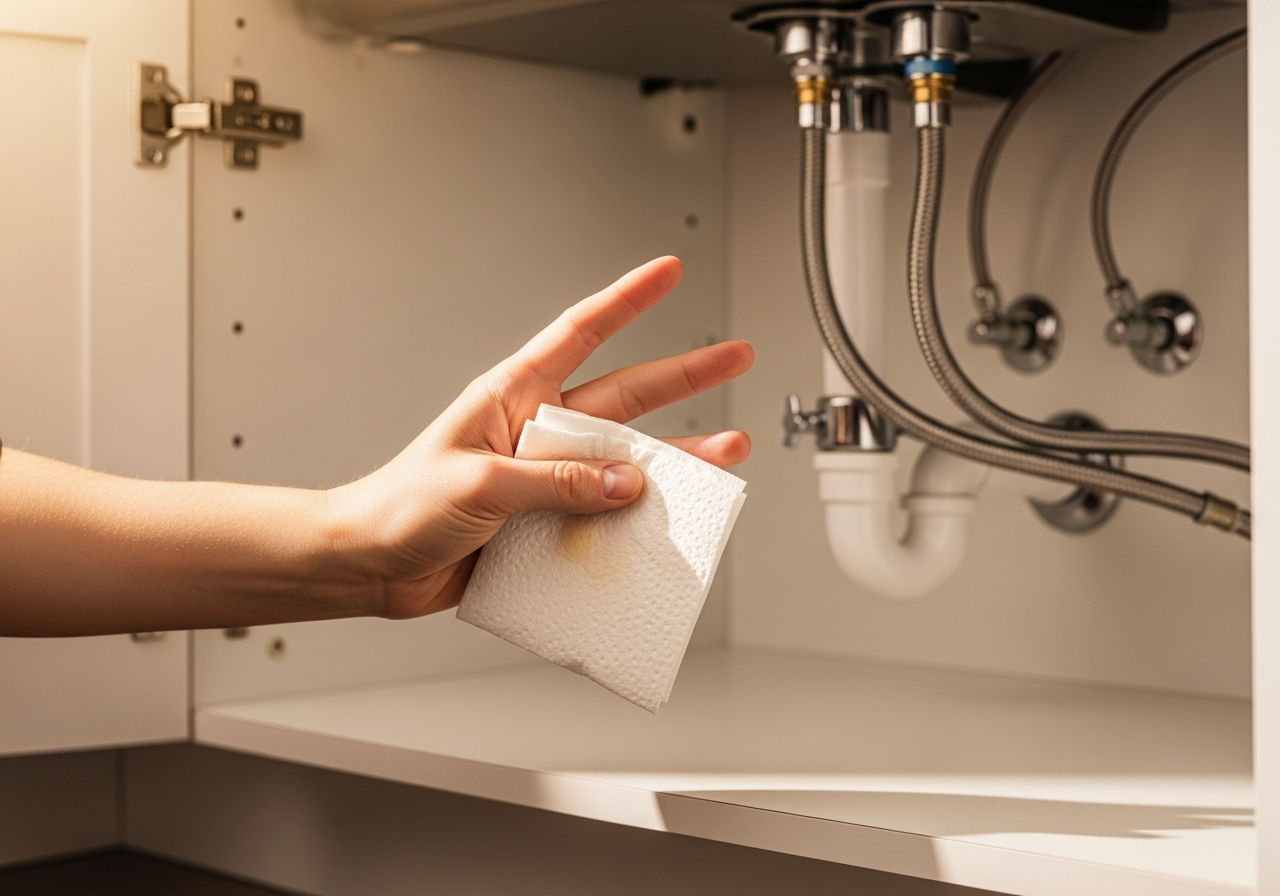
- Run a dry hand along exposed supply lines and shutoff valves to feel for any dampness.
Seasonal checks should extend to laundry rooms, water heaters, and crawlspaces, where rust stains or moisture on exposed piping can reveal slow leaks before they have a chance to escalate.
Practical Tip: Place a dry paper towel under a suspect fitting and come back a few hours later. Even a faint damp spot confirms an active drip.
Just as important: know where your fixture shutoff valves and main water shutoff are located, and test them occasionally to make sure they still turn freely. Shutting off water quickly the moment a leak is discovered can dramatically limit the damage.
DIY Tasks vs. When to Call a Professional
Many homeowners can safely tighten a slightly loose connection, replace worn caulk around a tub, or swap out a sink aerator — provided they turn off the water at the fixture shutoff first.
That said, some situations genuinely call for a licensed plumber:
When to Call a Pro:
– A leak persists or keeps coming back after minor fixes
– Moisture appears behind walls, in ceilings, or near electrical components
– You notice sagging ceilings, large wall bubbles, or widespread mold
– You’re unsure about local code requirements for plumbing work
When there’s any doubt, bringing in a qualified professional is always the safer call.
Protecting High-Risk Areas
Kitchens, bathrooms, and laundry rooms concentrate both water use and leak risk in one place. Keeping under-sink cabinets uncluttered makes inspection easier and allows for better airflow. Exhaust fans in bathrooms help keep humidity in check, while simple drip trays beneath appliances can catch and flag small leaks before they spread.
In basements, crawlspaces, and utility rooms, try to keep storage off the floor and stay alert to condensation, rust, or staining around water heaters and main supply lines. These areas are easy to overlook but frequently harbor slow, damaging leaks.
Long-Term Strategies for a Drier Home
A truly proactive approach means replacing aging components before they fail, not after. Flexible hoses showing signs of wear, shutoff valves that no longer turn smoothly, and water heaters nearing the end of their typical service life are all better candidates for planned replacement than emergency fixes.
Keeping a simple log of when components were last inspected or replaced helps maintain consistency and can prove useful if an insurance claim ever arises. It’s also worth reviewing your home insurance policy to understand which types of water damage are covered and whether maintenance expectations apply — the specifics vary considerably by insurer and policy.
Building the Habit
Hidden leaks often start small but can cause extensive, expensive damage when left unaddressed. Regular visual checks, a sharp eye for early warning signs, and knowing when to call in a professional form the three pillars of effective prevention. Homeowners who build consistent inspection habits and deal with minor issues promptly are far less likely to face the disruption of a major water damage repair. Set a recurring reminder for your next monthly plumbing check, and let the guidance here serve as the foundation for a simple, lasting home maintenance routine.